

Page Contents
What is Dactylitis ?
Inflammation of one or more fingers is often referred to as “dactylitis or sausage digit” and is considered a hallmark feature of psoriatic arthritis (PsA)- often this disease may affect the short tubular bone of both the hands and the feet.
The term dactylitis comes from the Greek word “daktylos” meaning “finger” and id believed to be extremely painful, as the anxiety is felt deep in the bones of the affected part of the body. Several kinds of dactylitis may occur, ranging from the swelling, enlargement, and scratches of both the fingers and the toes seems to originate from the flesh and is usually involves only some fingers and/or toes unevenly. A condition that causes tremendous ache and harmfully force the proper range of motion of the hands and feet.
When deciding on the method of treatment for dactylitis, the following factor needs to be considered:
- Bone structure of the feet and hands
- Reoccurrence of the swelling
- Condition of the soft-tissue surrounding the bones or tendons of the body
- Other injuries associated
- General health of the individual
Generally, more than 200,000 individual are affected by this certain condition and it occurs typically more in infants and young children. Sickle cell dactylitis – is often one of the signs of having an anemia while blistering distal dactylitis – develops when the fleshy pad of the distal part of the finger becomes puffy. These are several types of dactylitis that fall under this category. This type of dactylitis looks similar to sausages which are obese and gives us a sign of some other developing health problems in the future.
Dactylitis Symptoms
Symptoms and signs of a dactylitis can appear immediately or can take as much as three (3) days to develop. Symptoms and signs can include:
- Weight Loss
- Swelling of feet and hands
- Eczema
- Vision Problems
- Genetic blood disorder
- Inflammation of feet and hands
- Tenderness near the fingers or toes affected
- Fever
- Joint pain
- Shortness of breath
- Nasal Obstruction
- Fatigue
An individual should seek emergency medical aid when he/she has experienced an any of the following:
- Fever that cannot be stopped or greater than 101.5 F
- Severe pain which is not relieved by the medications taken at home
- Inflammation of some affected areas that is not related to feet and hands
Injuries or complications that relate to a dactylitis can include:
- Stroke – resulting to progressive narrowing of the blood vessels inside the body.
- Decrease immune reactions
- Chronic Renal failure
- Infections
- Pulmonary Hypertension
Dactylitis Causes
There are numerous common causes for a dactylitis including:
- Inflammatory bowel disease
- Psoriasis
- Sickle cell disease
- Tuberculosis
- Systemic disease
- Psoriatic arthritis
- Leprosy
- Sarcoidosis
- Chronic Arthritis
Dactylitis Treatment
The main goals of treatment are to preserve a high level of physical and social functioning and maintain a good quality of life. Following are some of the most commonly used treatments.
- Taking OTC over-the-counter drugs such as Ibuprofen (Motrin) and acetaminophen (Tylenol) for pain.
- In such severe cases, the use of biologic therapies is important in initiating this disease. This therapy might be recommended.
- Handling with IV fluids as well as pain medications – so as not to make the inflammation any worse.
- Steroid injection is needed if only a few fingers or toes are involved – normally improves and helps in some acute situation.
- Surgery is not necessary for treating dactylitis disease.
If an affected individual has minor episodes of dactylitis, he/ she may not need any medical treatment. For instance, here are some home care measures that you may apply in treating this condition.
- Drinking more fluids than normal such as water as well as juices
- Application of heat and warm compresses to affected area.
Dactylitis Pictures
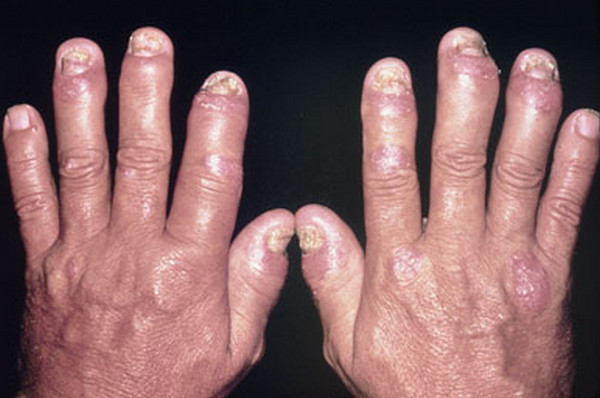
Picture 1 : Dactylitis (hand)
Image source : jeffreymd.com

Picture 2 : Dactylitis (Inflammation of fingers)
Image source : birjournals.org
Picture 3 : Dactylitis (leg)
Image source : hopkins-arthritis.org


