Page Contents
Ventral Hernia
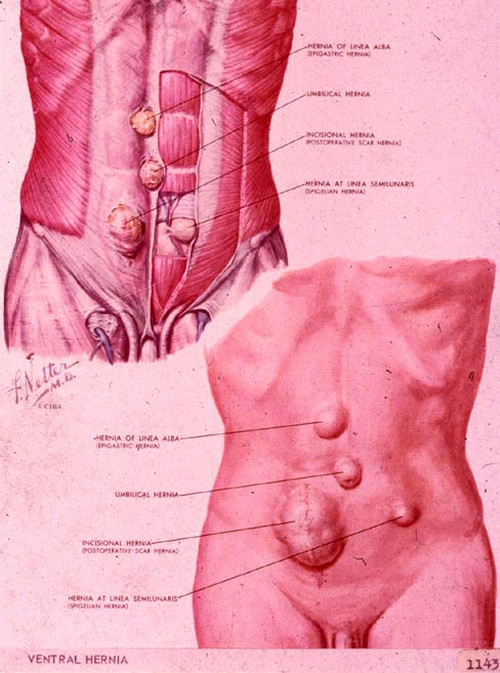
When a bulge appears on the surface of the body, especially on or around the abdomen, most people fear of cancerous tumor. But to your information it may not always be a tumor but possibly a Hernia. There are different types of hernia such as Epigastric Hernia, Umbilical Hernia, Inguinal Hernia, Femoral Hernia, etc. But here we will be discussing about Ventral Hernia.
Ventral Hernia Definition
Most people would wonder what is Ventral Hernia actually and how does it affect? There is not ascertained definition for Ventral Hernia; however, here is a useful description of the condition. Ventral Hernia is also scientifically referred to as Incisional Hernia, which is a condition occurring at debile region due to unhealed surgical incision. This condition is usually prevalent at abdominal region.
Hernia is a physical glitch wherein internal parts, such as abdomen or intestine protrude. When this happens in normal state of body, the surrounding tissues and muscles encloses the organ with the cavity. However, in case of Hernia the surrounding muscles and tissues are weak which causes the protrusion to come out of the cavity. This condition causes discomfort in affected person and can be cured with appropriate treatment.
Ventral Hernia Symptoms
There are several symptoms experienced by a Ventral Hernia patient. These symptoms may include:
Swelling
Swelling is the most common and frequently recorded sign of Hernia. The engorgement caused internally is noticeable on the surface as well.
Bulge
The swollen organ is noticeable as a protuberance in the affected person. It can be seen even when an affected person is lying down.
Pain
To your information, Ventral Hernia is usually painless, even to the sense of touch. However, in cases wherein the swollen body part is still encapsulated with weak muscles and tissue, pain is a common sign. In some cases the condition may develop necrosis due to reduction or no blood supply to the protruded part. This causes the tissues to die and result in necrosis.
There are also other symptoms of the condition such as:
- No bowel movement (experienced in case of incarcerated hernia)
- Vomiting
- Queasiness
- Increased heart rate
- And sometimes tenderness to touch
If the condition is not treated timely, then some symptoms may tend to exacerbate with time, such as, swelling, pain, heart palpitation rate, etc.
Ventral Hernia Pictures
Picture 1 : Ventral Hernia
Image source : fnu.ac.f
 Picture 2 : Ventral Hernia Repair with Mesh
Image source : lapsurg

Picture 3 : Ventral hernia pre-operative view
Image source : biotechfordummies

Picture 4 : Ventral Hernia Image

Picture 5 : Laparoscopic Ventral hernial repair
Image source : doereport
Ventral Hernia Causes
There are number of factors that may serve as a reason for Hernia affliction. Below mentioned are some of the possible causes of hernia.
Unhealed surgical incision
The hernia that we are dealing with, Ventral Hernia is caused usually due to operated region which is debile due to incompletely healed surgery incision.
Weakened Stomach wall
Weakened stomach wall is a common physical factor that leads to hernia. The protruded body part tares these weakened muscles and comes out from its place
Infected surgical incision
A Ventral Hernia may also occur due to internal surgical incision becoming infected.
Hematoma
Hematoma is a condition wherein blot clots are developed. If this condition afflicts around the surgically operated area of the body it may cause lead to the condition.
Undernourishment
In certain cases, there is a delay on incomplete healing of incision due to inappropriate supply of nutrients to the surrounding tissues. This is yet another reason why Ventral Hernia may occur.
Torn stitches
However, tearing of stitches have indirect link with the physical anomaly. Any incision undergoing stress and strain may get torn. This may cause bleeding and possibly infection, which in turn may lead to ventral hernia.
Obesity
It is studied that surplus fat in the body usually causes delayed healing of operated region. This may increase chance of possible rupture to the muscle tissues surrounding the region.
Age
Age is again a factor that causes surgical incision to heal slowly, during which the incision may undergo strain causing wear and tare of the wound. However, generally the immune response and self repairing ability of body in older individual is weaker as compared to younger individuals.
Coughing
Surprisingly, intense coughing may exert spontaneous tremendous pressure on the operated region and may perhaps cause the wound to undergo rupture leading to Ventral Hernia.
The risk of getting afflicted with hernia, caused due to delayed healing, can be reduced by taking medicines that heal the wound fast. These medications are prescribed by the doctor generally.
Ventral Hernia Treatment
Ventral Hernia should not be taken lightly as it is a serious and discomforting condition. It is best to treat the condition timely as early as possible. In some cases immediate treatment becomes necessary, such as in case of Strangulated Hernia. Here are some possible treatments of Hernia.
Medical Treatment for Ventral Hernia
There are several medicines that may be prescribed by your doctor in order to cope with the condition. These medicines may include:
NSAIDs or Non Steroidal Anti- Inflammatory Drugs
These medicines may be prescribed in order to provide relief from pain and swelling. Some NSAIDs may be given in order to reduce fever or high body temperature.
Steroids
Steroids are usually prescribed to hernia patient in order to alleviate inflammation
Antibiotics
Antibiotics are prescribed to a Ventral Hernia patient in order to avoid any possibility of infection that may result from bacteria. Consider taking this medicine unless your doctor asks you to stop its use.
Home treatment for Ventral Hernia
There are also some home based measures that may help in coping with hernia.
- Avoid exerting pressure on the affected region
- Use supportive hernia belt which helps in reducing pressure
- Avoid smoking
- Take proper nutrient that may help in strengthening the muscles
- If you are suffering from constipation then try to control it
Ventral Hernia Repair
Ventral Hernia repair with Mesh
The Ventral Hernia repair method, which includes mesh, is scientifically referred to as laparoscopic Ventral Hernia repair. This surgical procedure involves use of laparoscopes, which are significantly small cameras, mostly used in medical industry. In this surgical operation a smaller incision is made to insert the laparoscope and perform the operation. The patient who is suggested laparoscopic surgical treatment is instructed to have some lifestyle changes for faster healing of the wound. He/ She may also be suggested to take precautions against physical conditions that may cause sneezing or intense coughing.
A Ventral Hernia repair usually involves installation of supportive mesh of synthetic material. Meshes are commonly used to support the weakened muscle tissues and hold them in place averting further ruptures from stretching. This method is also colloquially referred to as tension free method of muscles repair
Ventral Hernia repair Complications
Here are some possible complication that may occur in case of Ventral Hernia repair:-
- Reaction to general aesthesia
- Bleeding
- Intestinal injury
- Abdominal injury
- Infection in mesh (which may need replacement or removal)
- Pneumonia
- Blood clots
- In some cases even after undergoing the surgery the condition may affect again
Ventral Hernia Surgery
Treating Ventral Hernia usually involves surgical procedures to repair the torn region. Hence, Ventral Hernia surgery is mostly suggested by doctors to Incisional hernia patients:
Herniorrhaphy
Under this surgical procedure the swollen organ or part is replaced and a support to the abdominal muscles is implanted. This kind of surgery requires big incision and takes longer time to be healed completely.
How is Ventral Hernia Diagnosed?
In order to confirm whether you are affected by Ventral Hernia there are several diagnoses that may be suggested for a patient, these tests may include:-
Abdominal Ultrasound
CT scan or Computed Tomography Scan
Laparoscopy test
Ventral Hernia Prevention
It is always better to practice prevention then struggling for treatment later. Hence here are some useful Ventral Hernia preventions:
- Avert constipation
- Treat cough issues
- Reduce weight
- Do moderate exercises or yoga
- Avoid doing heavy work during the first week after any abdominal surgery
References
http://en.wikipedia.org/wiki/Ventral_hernia